Article: The Pleasure Space: Ultimate Guide to the G-Spot Complex

The Pleasure Space: Ultimate Guide to the G-Spot Complex

The study of human sexuality advances alongside science, yet few topics generate as much fascination, debate, and internet searches as the so-called G-spot. Every day, thousands of people try to decipher the same questions: Does it really exist? How do you locate it? Is it an independent organ or an anatomical myth?
This guide breaks down the latest scientific evidence, the anatomy of pleasure, and stimulation methods, separating cultural myths from biological reality.
Understanding your sexual anatomy by taking time to explore your body without pressure or shame is a basic part of health and self-care. The more familiar you are with your own body the easier it is to guide a partner and build a more satisfying shared experience.
- Dr. Naomi Sutton
In collaboration with:

Dr. Naomi Sutton
NHS Consultant Physician in Sexual Health and HIV, NHS Sexual Health Consultant Physician MBChB, FRCP, Dip HIV & GUM, FECSM.
Contents
- What Really Is the "G-Spot"? Demystifying the Magic Button
- Exact Location and the Anatomy of Touch
- The Scientific Debate: Does It Exist or Is It an Illusion?
- Step-by-Step Practical Stimulation Guide
- Orgasm Variability: Why Does Every Body Respond Differently?
- Frequently Asked Questions About the G-Spot Complex (FAQ)
- Conclusion: Your Map Is Unique
What Really Is the "G-Spot"? Demystifying the Magic Button
The term originates from the German gynecologist Ernst Gräfenberg, who in the 1950s described an especially sensitive area on the anterior wall of the vagina. Historically, pop culture commercialized it as a "magic button" or an isolated switch that, when pressed, guaranteed an instant orgasm.
Today, modern sexology and anatomy reject that definition. The G-spot is neither a unique organ nor an independent anatomical structure.
Science now prefers to call it the Clitoris-Urethra-Vaginal (CUV) Complex, which is the official name of the G-Spot (also known as the G complex). It is a confluence zone where several deep erogenous structures connect and interact: the internal roots of the clitoris, the Skene's glands, and the vaginal wall. Therefore, when you stimulate the "G-spot," you are actually activating an interconnected network of erectile tissue and nerve endings.

Exact Location and the Anatomy of Touch
Finding this area does not require deep exploration, but it does require understanding its texture and orientation.
- Anatomical coordinates: It is located on the anterior wall of the vagina — the upper wall that faces the abdomen or belly button.
- Depth: It is situated approximately 1.5 to 2 inches from the vaginal opening. It is a relatively superficial area.
- Texture: Unlike the rest of the vaginal walls, which are usually smooth and soft, the tissue in this area is slightly rough, ridged, or spongy, with a consistency similar to the roof of the mouth (the hard palate). This texture becomes much more prominent and sensitive when the person is already in an aroused state.

The Scientific Debate: Does It Exist or Is It an Illusion?
The skepticism surrounding the G-spot stems from a reality: many people do not experience orgasms exclusively through vaginal penetration.
In 2012, a systematic review published in the Journal of Sexual Medicine analyzed more than 60 years of research and concluded that there is no biological evidence or biopsies proving that the G-spot is a new organ or a distinct anatomical entity.
The Pleasure Map Perspective
Current scientific consensus does not deny the pleasure felt in that area, but rather its labeling as something "separate". Vaginal and clitoral orgasms are not isolated events:
- The clitoris is an inverted "Y"-shaped organ that measures between 3.1 to 4.7 inches in total. What we see on the outside is just the tip of the iceberg (the glans).
- The "roots" and vestibular bulbs of the clitoris hug the walls of the vagina from the inside.
Therefore, stimulating the G-spot is, in reality, an indirect stimulation of the deep structures of the clitoris. The body must be understood as a unified map of pleasure, not as a collection of independent buttons.

Step-by-Step Practical Stimulation Guide
To explore this area effectively, anatomy dictates that order and physical conditions are fundamental. The tissue must be engorged with blood (aroused) to be easily perceptible.
1. Essential - Prior Arousal Phase: Do not try to locate the area "cold". Dedicate time to external stimulation (clitoris, labia, massage) so that the pelvic blood vessels dilate. This causes the tissue of the G-spot to swell, become spongy, and be much easier to feel.
2. Correct Angle: The "Come Hither" Technique: With the person relaxed, introduce one or two fingers into the vagina with your palm facing upward (pointing toward the abdomen). Perform a gentle but firm curling motion with your fingers, mimicking the gesture of beckoning someone.
3. Active Communication: Adaptive Pressure and Rhythm: Unlike the external clitoris, which prefers light and fast strokes, the G Complex responds better to firm, steady, or rhythmic pressure. Modify the intensity based on your partner's feedback.
4. Transition to Climax: Managing the Urge to Urinate: Due to its proximity to the urethra and paraurethral glands, it is very common to feel a sudden urge to urinate when this area is stimulated. This is a sign that you are in the right place. If the bladder is empty, relaxing into that sensation usually precedes orgasm or ejaculation.
If you are seeking a detailed yet accessible manual for exploration, you may find this practical guide on utilizing G-spot vibrators particularly helpful for your journey.

Orgasm Variability: Why Does Every Body Respond Differently?
One of the greatest sources of sexual frustration is the belief that there is a single "correct path" to orgasm. The scientific reality is that the human sexual response varies enormously due to unique anatomical factors in each person.
If you or your partner do not experience orgasms through G-spot stimulation or through penetration alone, it does not mean there is a medical problem, dysfunction, or lack of connection. It simply means that your map of nerve endings is distributed differently.
Not sure still? We recommend reading 10 myths about orgasms you should stop believing.
Factors That Determine Your Pathway to Pleasure
- Clitoral-Vaginal Distance: Anatomical studies show that the physical distance between the glans of the clitoris and the opening of the urethra/vagina varies by millimeters from person to person. If this distance is shorter, penetration naturally stimulates the roots of the clitoris; if it is longer, direct external stimulation will be required.
- Nerve Ending Density: Just as some people have more sensitivity in their fingertips than others, the concentration of nerves in the anterior wall of the vagina varies drastically from one body to another.
- Development of Skene's Glands: The size and responsiveness of the "female prostate" are not uniform across all anatomies.
If you would like to read more about female orgasms, we invite you to check this article on female ejaculation.
The Climax Spectrum: Many Paths to the Same Goal
Pleasure is not a hierarchy where a vaginal orgasm is "superior" to a clitoral one. In fact, science shows that around 70% to 80% of women need direct stimulation of the external clitoris to reach climax.
The Golden Rule of Sexology: All orgasms stem from the same nerve root, the pudendal nerve. Changing the pathway does not change the validity or intensity of the pleasure.
| Stimulation Type | Primary Activated Structure | Typical Sensation Reported |
|---|---|---|
| Clitoral (External) | Visible tip (clitoral glans). | Acute, rapid, and profoundly surface-level. |
| G-Spot / CUV Complex (Internal) | Clitoral roots, bulbs, and Skene's glands. | Profound, widespread, with a sensation of fullness. |
| Blended (Combined) | Complete network of erectile tissue and pelvic nerve paths. | Frequently described as a highly expansive sensation. |
Comparison of external, internal G-Spot, and combined blended stimulation paths and sensory outcomes.

Frequently Asked Questions About the G-Spot Complex (FAQ)
Do women have a G-Spot?
Yes, but not as an isolated organ. What is commonly referred to as the G-spot is actually the tissue surrounding Skene's glands.
Located around the urethra, these glands are the female equivalent of the male prostate. They produce a clear fluid rich in prostatic acid phosphatase (PSA) that is released during peaks of arousal. Because of this anatomical layout, firm stimulation of the area often leads to female ejaculation (or squirting) and creates a distinct sensation of pressure compared to external clitoral stimulation.
Does G-spot stimulation hurt?
It shouldn't. If you experience pain, discomfort, or an unpleasant "chafing" sensation, it is most likely due to a lack of lubrication or because the body is not sufficiently aroused. Remember that vaginal tissue must be engorged with blood to become spongy and receptive. If the discomfort persists despite using plenty of lubricant and dedicating time to foreplay, it is best to consult a gynecologist.
Can it be stimulated with sex toys?
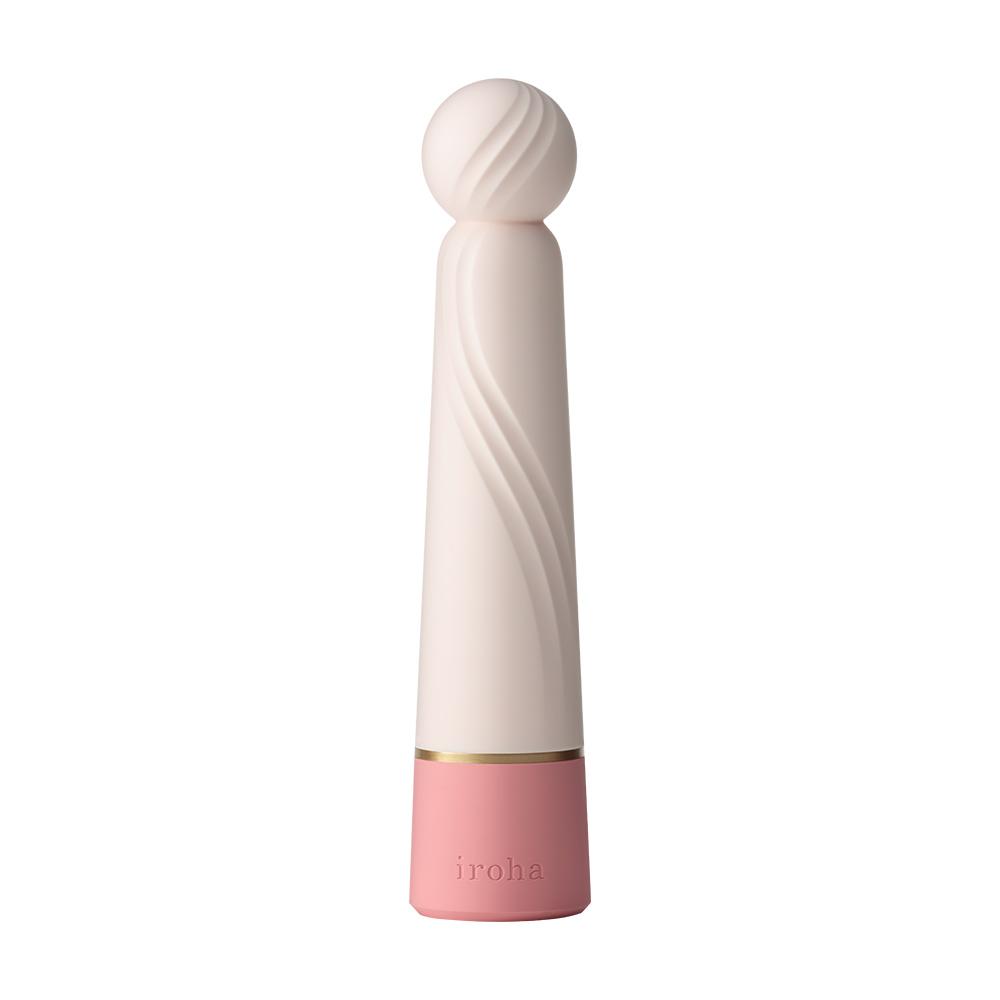
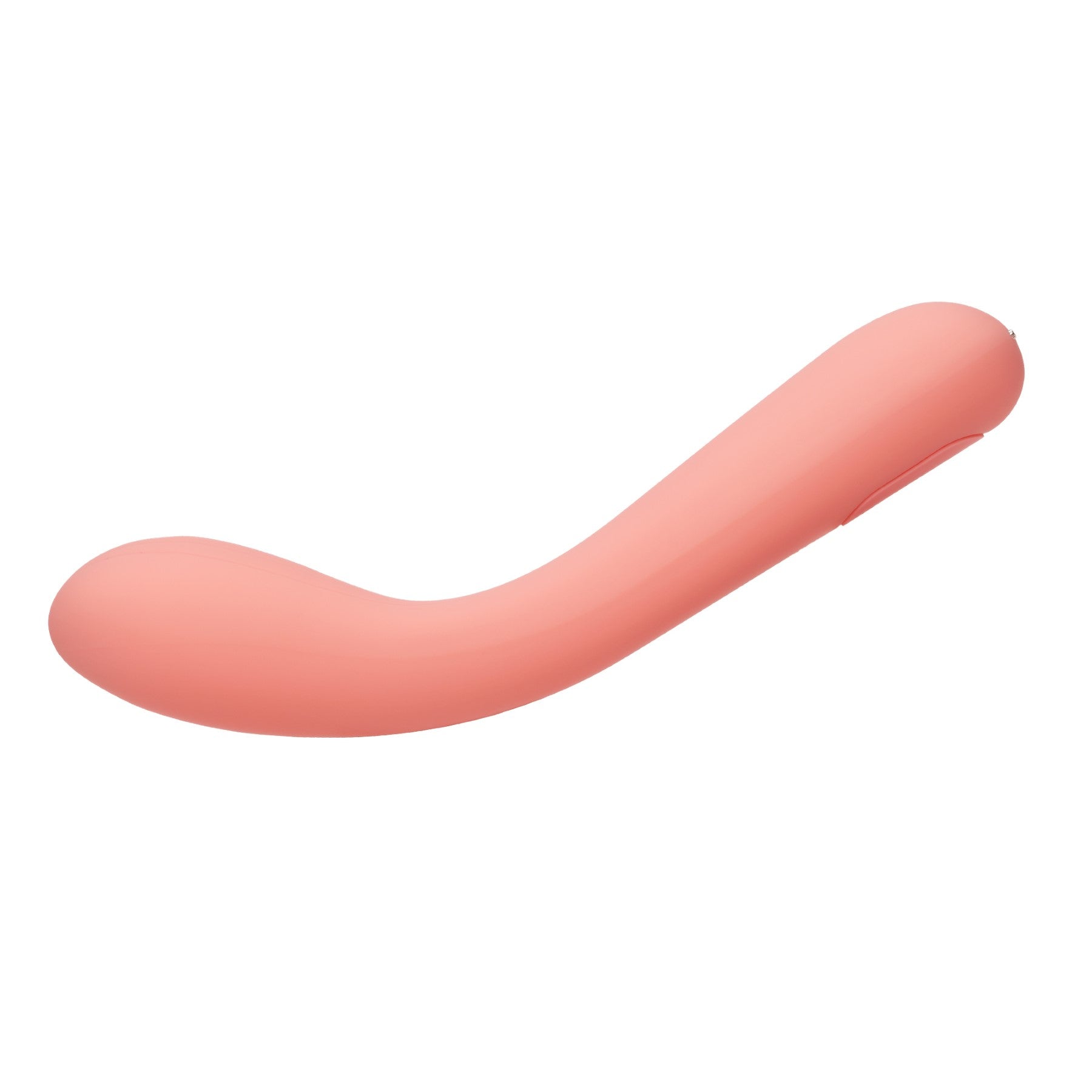
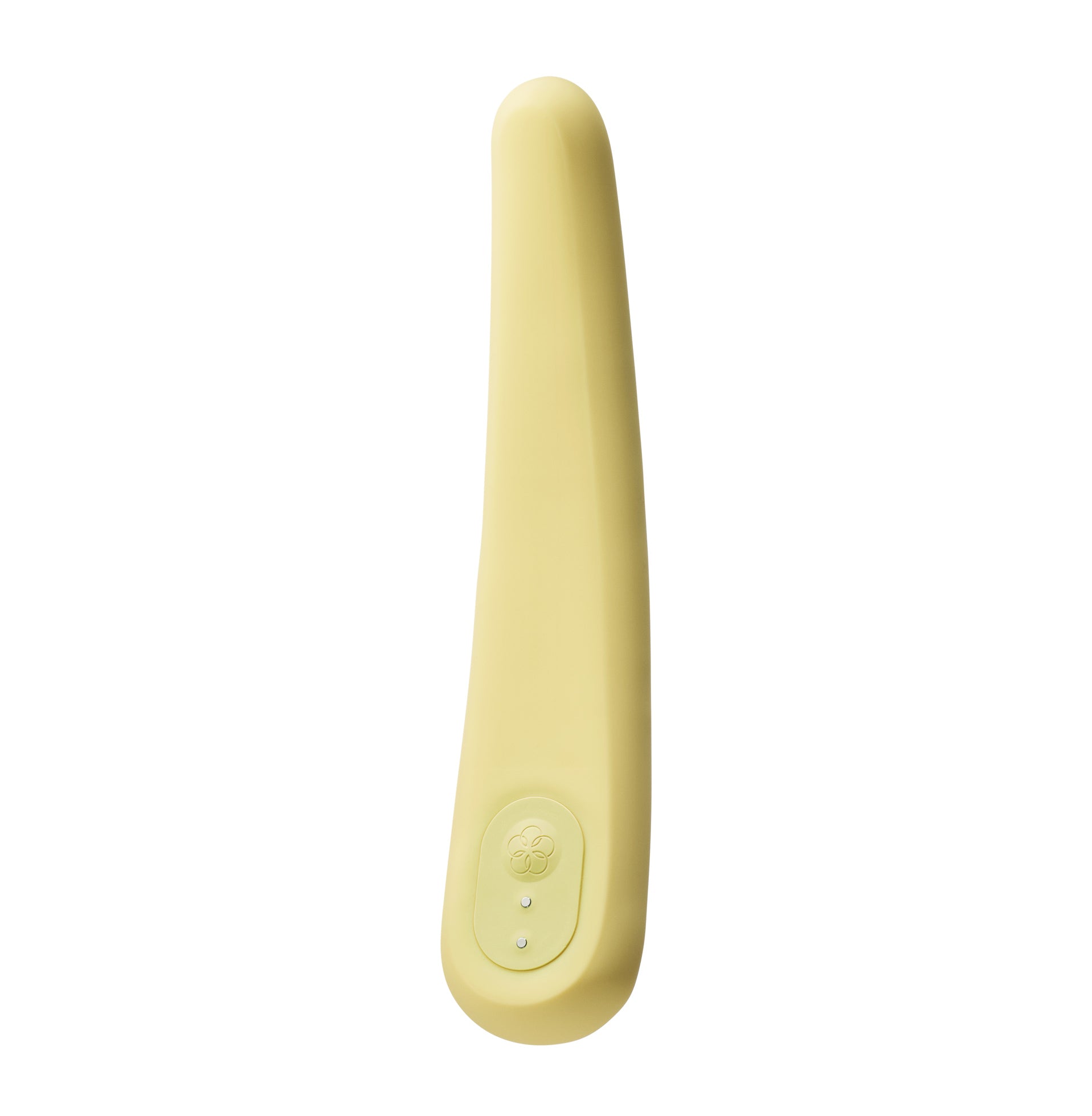
Yes, absolutely. In fact, there are specific toys for this area. They usually feature vibrators or massagers with a distinct curve at the tip, specifically engineered to match the angle of the anterior vaginal wall.
If I feel the urge to urinate, should I stop?
Not necessarily, unless it becomes too uncomfortable. That sensation of needing to pee is completely normal and is a physical sign that you are stimulating the right area, as the G Complex literally envelops the urethra and Skene's glands. If you push past that initial alert and manage to relax (making sure you visited the bathroom beforehand so you can be worry-free), that pressure often transforms into an intense orgasm or female ejaculation (squirting).
Does everybody have a G-spot?
Anatomically speaking, all women possess the CUV Complex (the internal erectile tissue and paraurethral glands). However, the sensitivity of this zone varies drastically from one body to another. Just because everyone shares the same biological structure does not mean everyone will experience pleasure or achieve orgasm in the exact same way.
Is There a Male Equivalent?
The prostate serves as the closest equivalent in male anatomy regarding nerve interconnection and pleasure intensity, often informally called the "male G-spot." Unlike the female G-spot, it is a gland belonging to the male reproductive system. Located internally around the neck of the bladder, it can be accessed through the rectum at a depth of 5–7 cm, and features a firm, round texture akin to a chestnut.

Conclusion: Your Map Is Unique
A fixation on finding the G-spot as a mandatory milestone often generates performance anxiety, which is the ultimate enemy of orgasm. No form of pleasure is better than another. Exploring your own body, or your partner's, with patience, without a timer in your head, and with open communication is the only real key to enjoying a fulfilling sexual life, free of myths and guilt.
If you are interested, we invite you to read the following blogs:
Mentioned in this Blog